Christmas Creative Glass LAB: Ornaments Inspired by the Tradition of Paraćin Glassmaking
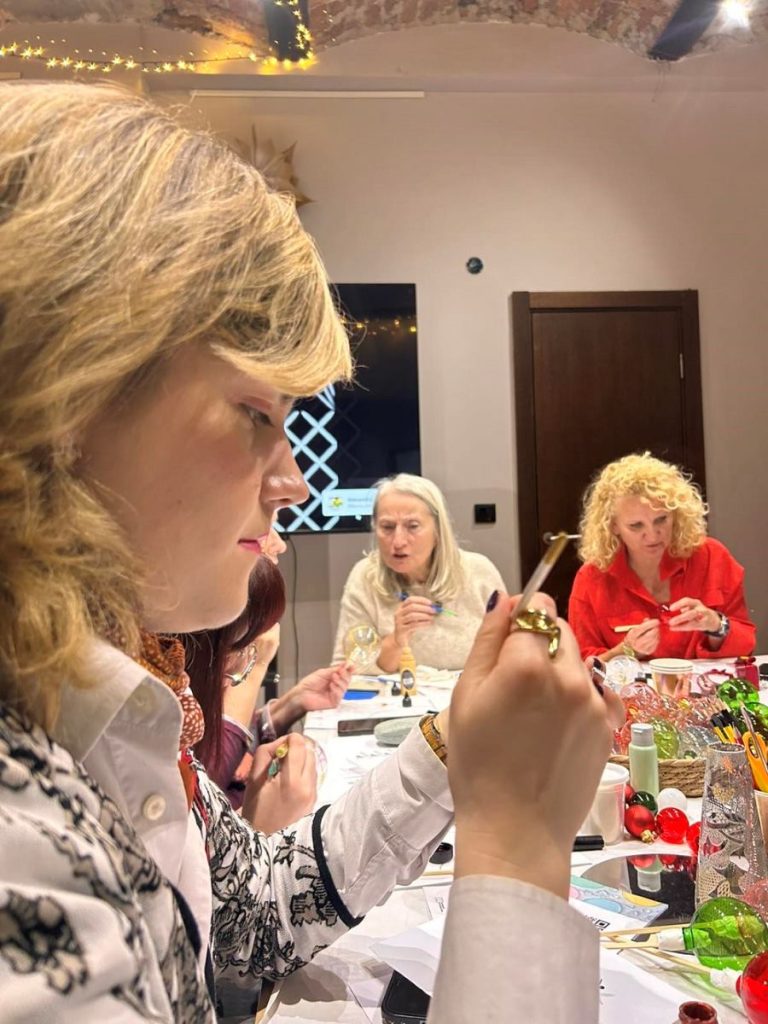
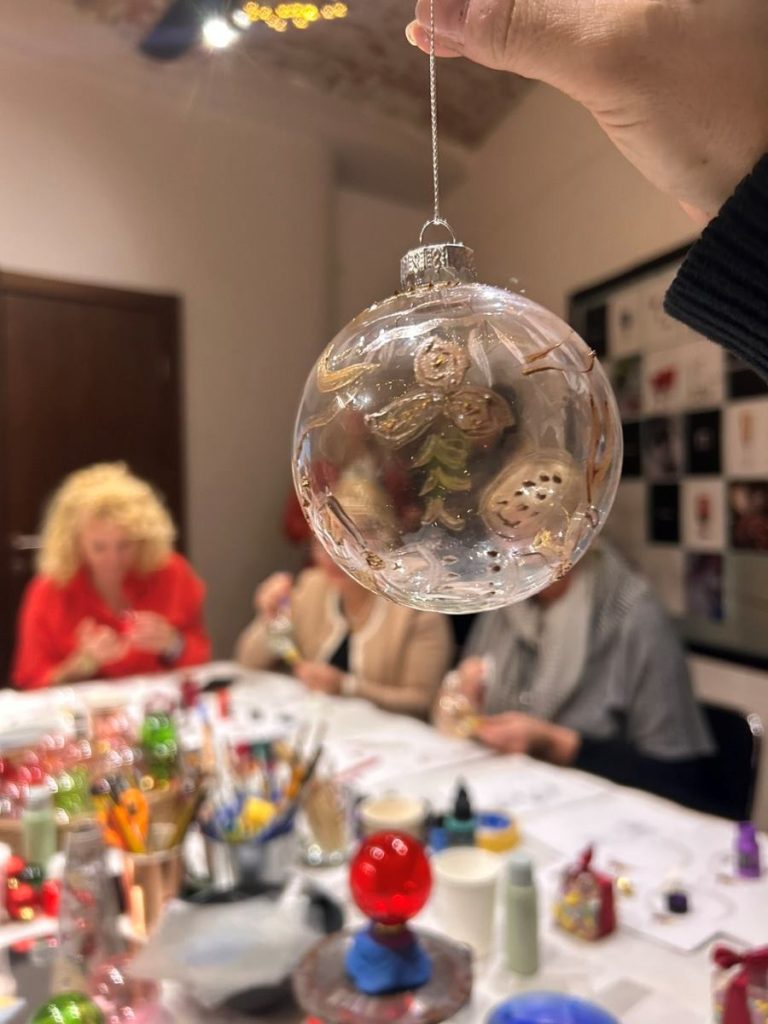
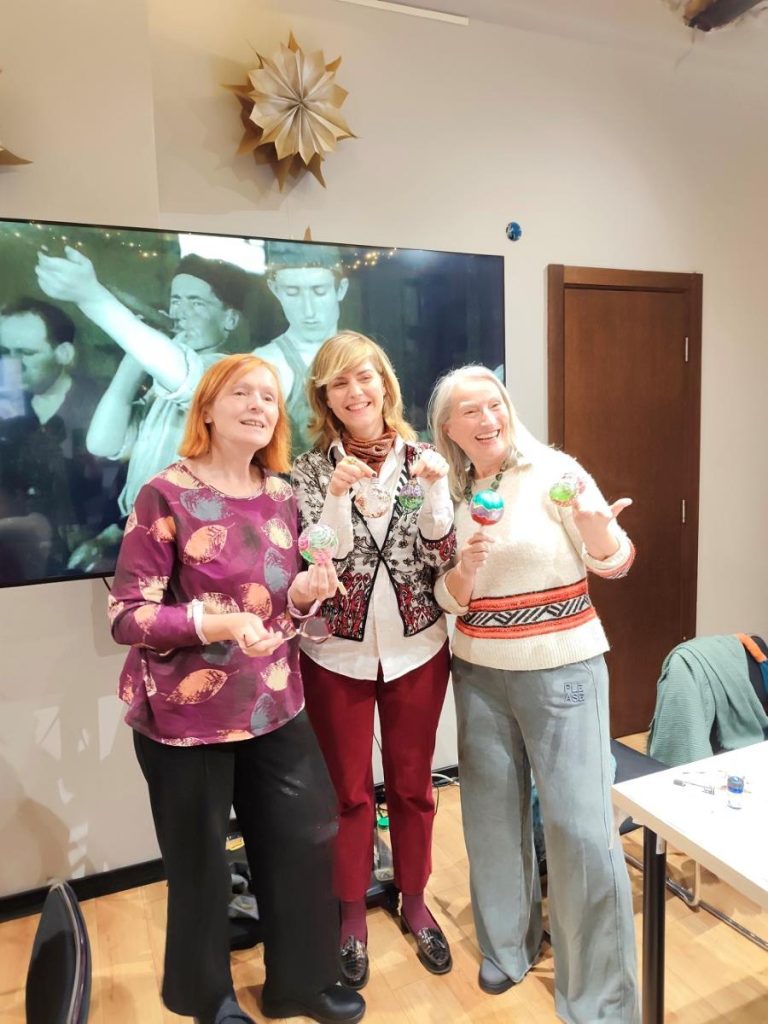
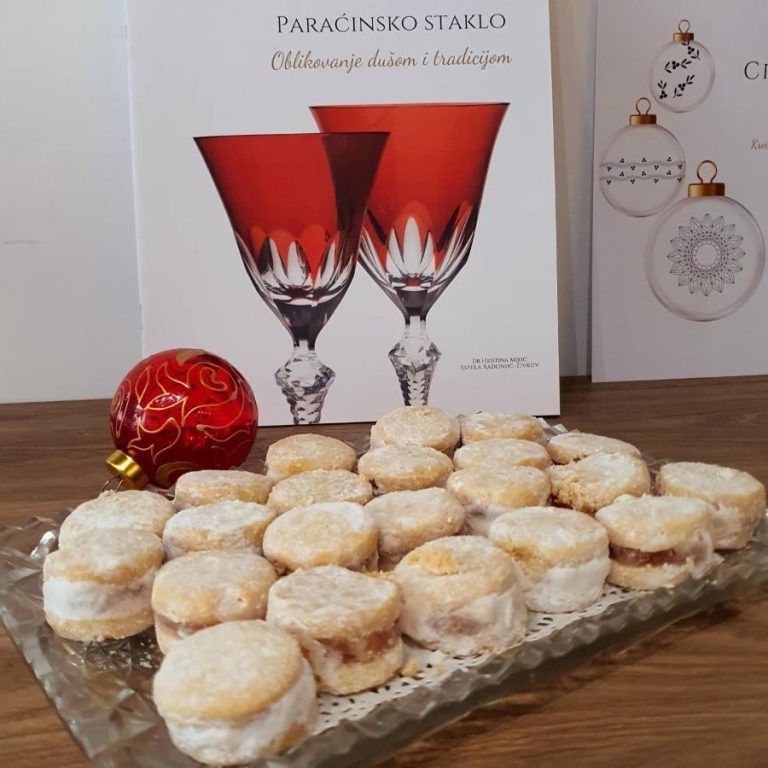
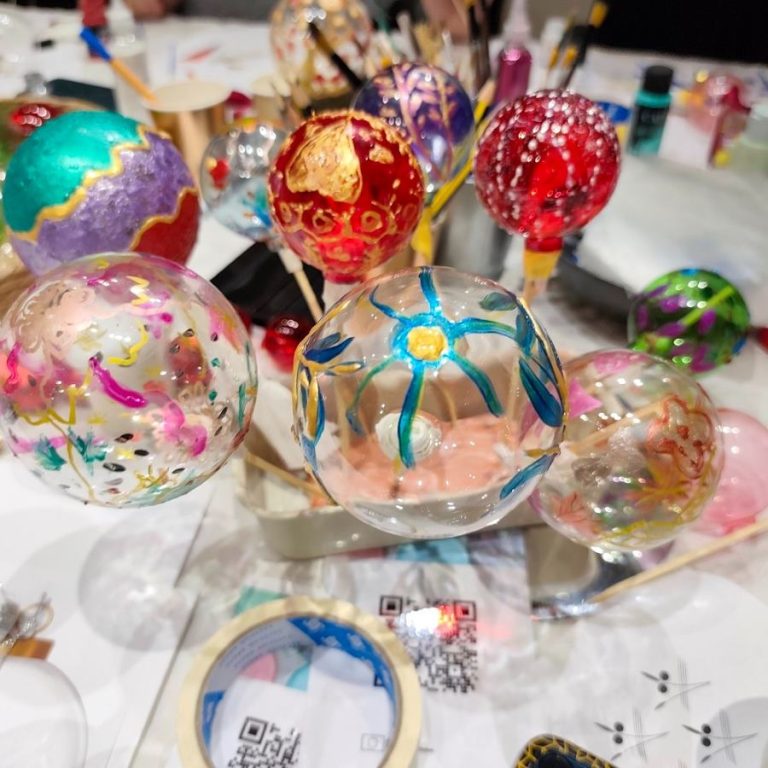
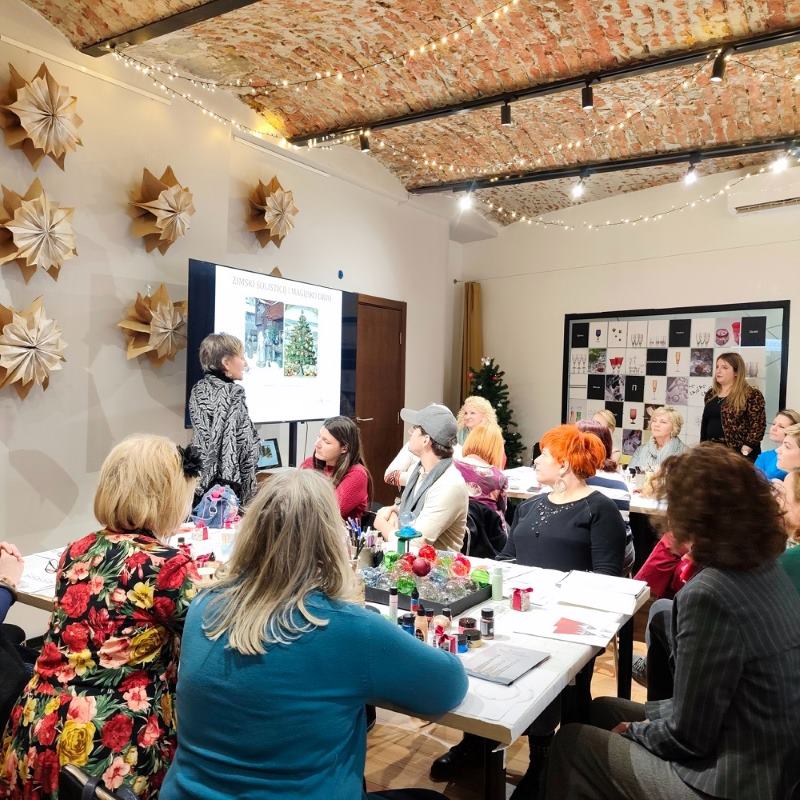
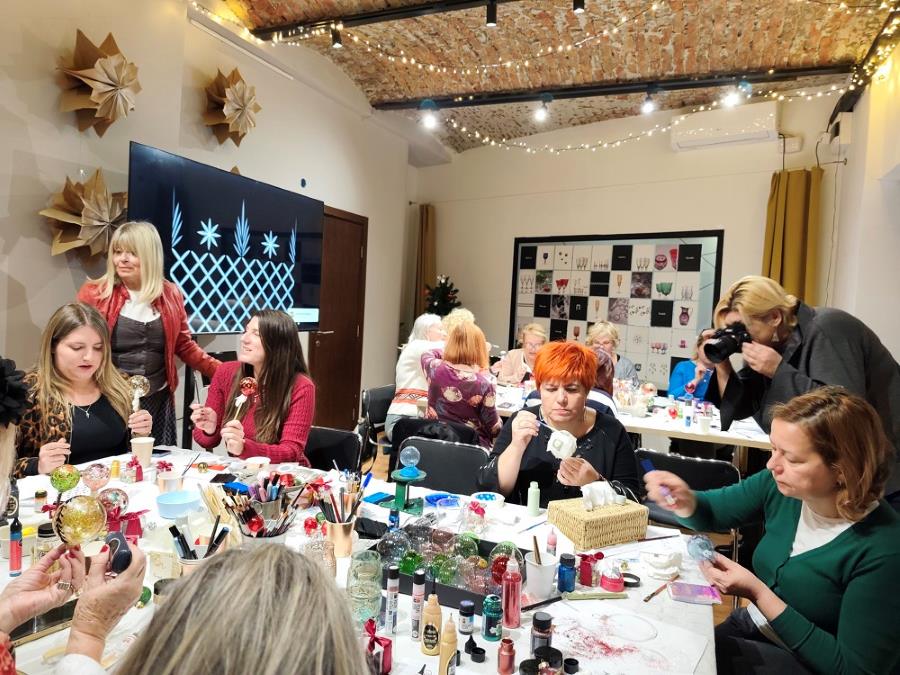
The New Year Glass Laboratory was focused on reinterpreting traditional motifs from Paraćin glassmaking by painting New Year’s glass baubles. Participants learned about the history of producing and decorating glass ornaments, as well as their stylistic features – distinctive patterns, lines, and designs that have shaped the visual identity of Paraćin’s glassmaking tradition. They then reimagined these motifs on glass baubles and decorative elements using traditional glassmaking techniques such as etching, painting, and gilding. During the workshop, participants also used the ArtGlass calculator to measure the carbon footprint of their glass creations.
The first Christmas tree ornaments were made in Germany during the 17th century as glass beads that could be hung on a tree, along with ornaments made from marzipan. Over time, this glass craft grew in popularity, and designers began creating ornaments in various shapes. The most popular became the glass baubles. German glassblowers produced them in a wide range of sizes, and they became so beloved that they spread to other parts of Europe and the United States. In the 18th century, glass ornaments began to be painted and decorated with additional elements such as glitter and ornamental stones. One of the most famous Christmas trees is the one displayed at Rockefeller Center in 1931, decorated with around 50,000 ornaments and standing over 30 meters tall.
With the rise of mass production, ornaments became widely available, and manufacturers produced glass baubles in various colors and designs. In the Czech lands, then the center of European glassmaking, glass ornaments were made throughout the 19th century in Jablonec, where, in addition to beadwork and glitter, engraving and cutting were also used for decoration. To encourage the production of Christmas ornaments, the Glass Institute was founded in the early 20th century, later leading to the establishment of the Glassblowers Cooperative of Christmas Ornament. About a decade later, their ornaments became a Czech export product. At Grand exhibitions in Brussels in 1935 and 1937, Czech Christmas ornaments won awards.
During World War II, the production of glass ornaments stopped due to shortages of materials and labor. After the war, the tradition of decorating Christmas trees with ornaments resumed, and new types of baubles were introduced, including plastic and metal ones. In Europe, the main centers of Christmas ornament production became Germany and the Czechoslovakia, with most production run by state-owned companies. Most of these companies were privatized during the 1980s and 1990s, and those that continued production are now privately owned.
Lab leaders:
dr Hristina Mikić Traditional Techniques and Motifs of Paraćin Glassmaking
Msr Tamara Ognjević The History of Producing and Decorating Glass Ornaments
Jelena Milošević, glass artist and designer
Lab is organized as the part of the project “Glassmaking Tradition Meets Innovation” funding by European Union, realied by FREN, Institut za kreativno preduzetništvo i inovacije, Rog Creative Hub i Museum Sydøstdanmark.

Funded by the European Union. Views and opinions expressed are however those of the author(s) only and do not necessarily reflect those of the European Union or the European Education and Culture Executive Agency (EACEA). Neither the European Union nor EACEA can be held responsible for them.