Lee Broom: Classic crystal decanters reimagined as modern chandeliers
Lee Broom: Classic crystal decanters reimagined as modern chandeliers
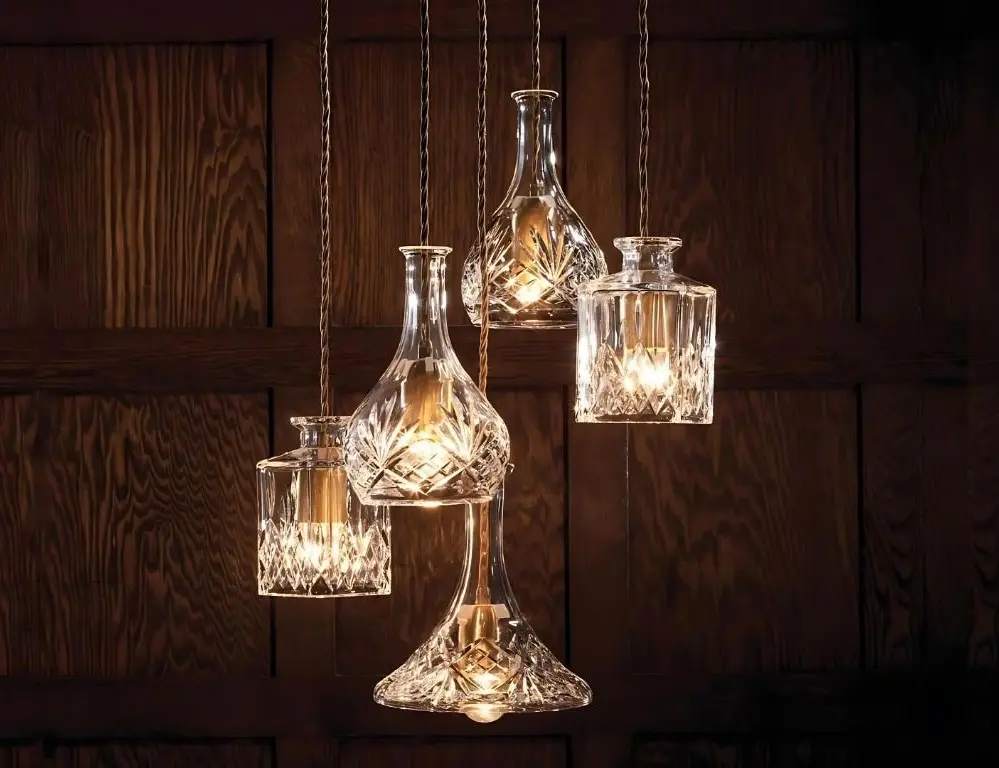
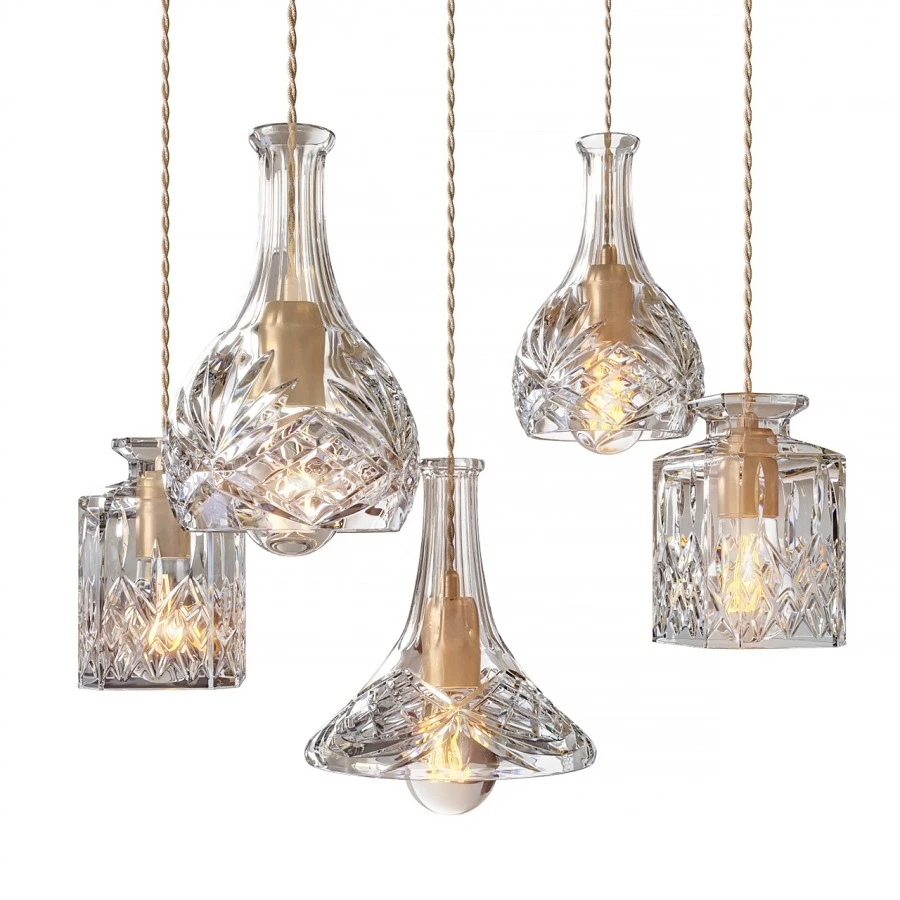
Decanterlight Chandelier, 5 Pieces, designed by Lee Broom || Photo: Courtesy of Lee Broom
Lee Broom is one of the UK’s leading product and interior designers. Before his name became a globally recognised design brand, The Financial Times listed him among Britain’s most respected talents. Somewhat later, The Guardian remarked that Broom is to furniture what Marc Jacobs or Tom Ford are to fashion.
From his early days of upcycling and creating unique pieces of furniture, Broom has evolved into a designer of award-winning series that are sold worldwide. A key part of this success comes from his Decanterlight pendants, originally crafted from vintage crystal decanters. The high demand for these lights, combined with the scarcity of vintage pieces, inspired him to start producing new crystal decanters and move into series production of the pendants. This journey eventually led to the creation of the Crystal Bulb – a product born from a dream – which has since helped him conquer international markets.
Traditional British craftsmanship in a boldly modern design
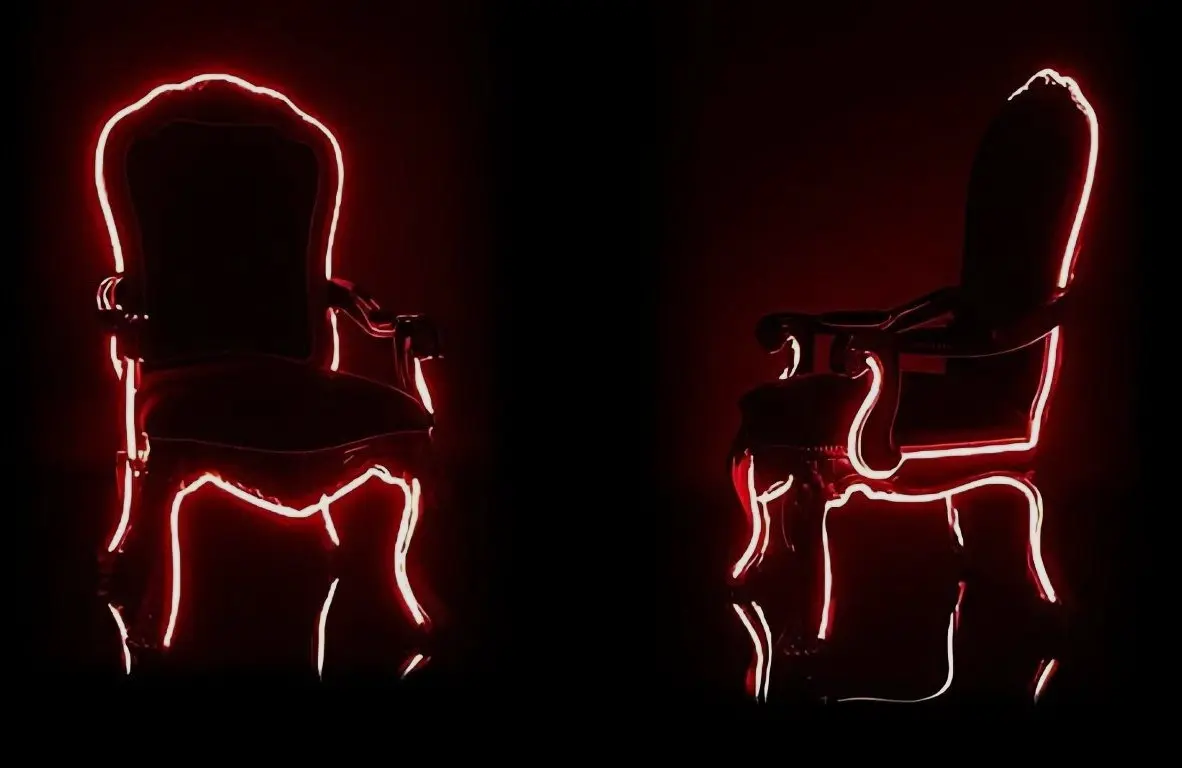
When he founded his company in 2007, Lee Broom made an immediate impact with his debut Neo Neon collection. He used hand-bent neon to illuminate quilting, piping, rivets, silk fringes, and the carved details of stylistic furniture (Louis XV), highlighting the mastery of traditional craftsmanship. The striking contrast between classic forms and eccentric lighting earned the collection recognition for its innovative approach to timeless design, establishing it as a celebrated example of reinterpreting tradition in a contemporary way.

That same year, Broom began receiving recognition for his earlier interior design work on London clubs such as The Valmont Club, Nightjar, Lost Society, and Arts Theatre Club, which quickly earned spots on “best of” lists. He carried out these projects alongside his colleague Maki Aoki, and the work helped fund his fashion design studies. In 2002, the two of them founded their agency, Makilee Design, offering interior design services to independent bars across London. When Maki decided to continue her career in Japan, Broom launched his own brand and company – Lee Broom. At just 31, he was already listed among the 15 most influential figures in the competitive and fast-moving British bar industry.
Leaving the Royal Shakespeare Company for a design calling

Fascination with the beauty of classic English crystal
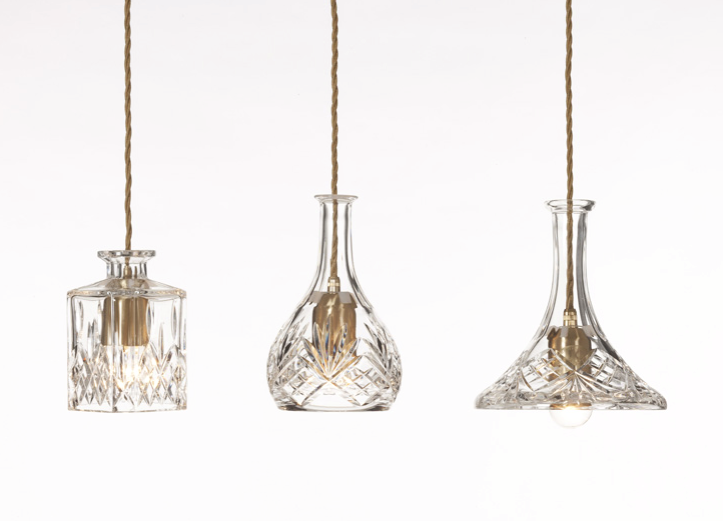
At the back of the restaurant, I designed a long communal table which lead up to a beautiful frosted glass window at the end of the room. It had glass shelving in front of it and I arranged vintage crystal decanters on the shelves and illuminated the back to create a glass and crystal silhouette, which seemed perfect for a bar and restaurant environment. I wanted to create a large-scale chandelier that swept along the length of the table so people could dine and drink alongside a beautiful installation. I looked at the decanters and thought ‘I wonder if I could make a light fixture out of some of those…’ and that’s how the piece was born. It felt crazy that nobody had done it before.
– Lee Broom, for Livingetc, 2021
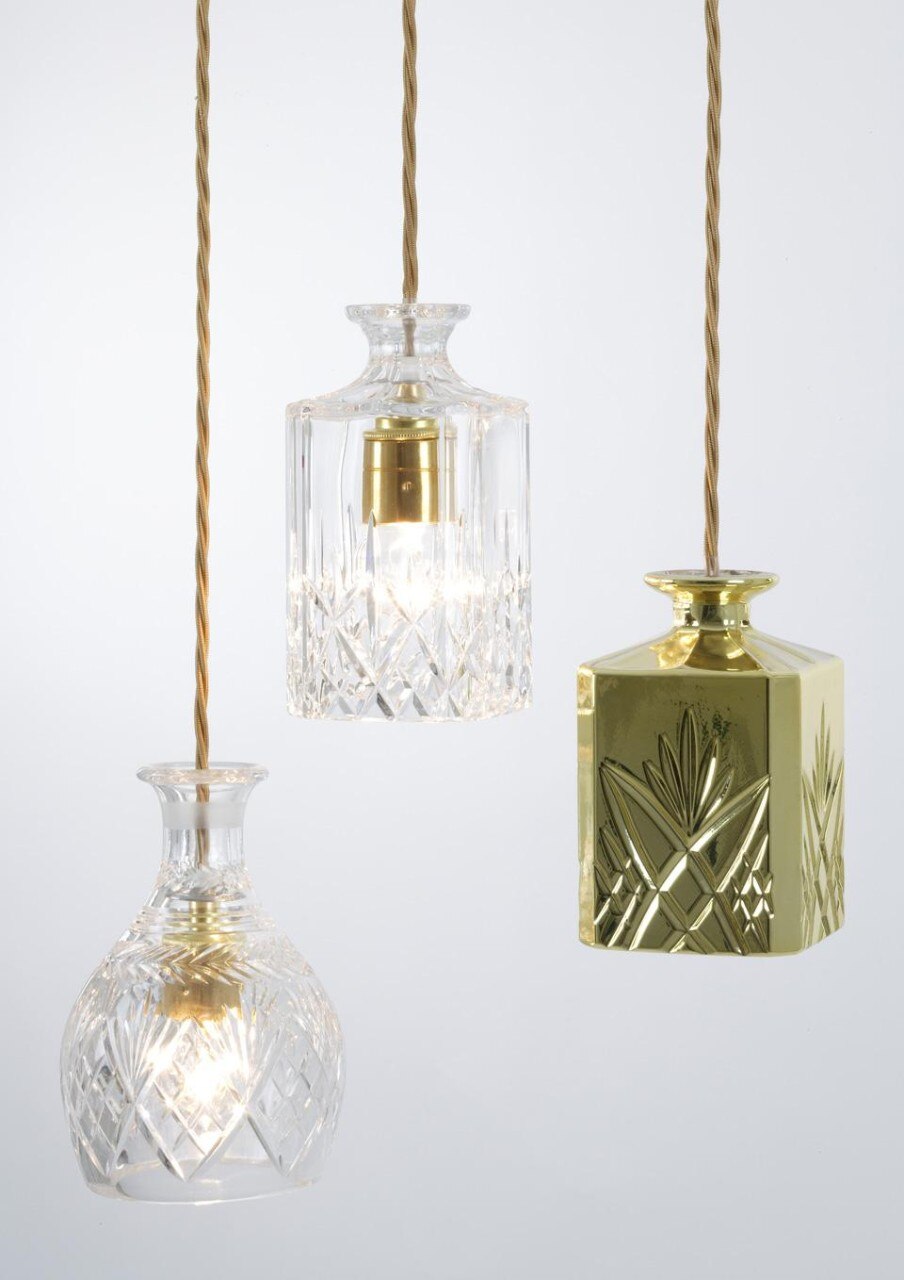
The Decanterlights are not a limited edition collection and in fact this is the first, more accessible range I have designed; although each piece is indeed unique, the collection will only end when no more vintage, cut crystal decanters can be found.
– Lee Broom, for Dezeen, 2010
Funnily enough, as we started to sell more and more – we were selling hundreds and hundreds of them – the price of vintage decanters went up and we couldn’t afford to buy as many as we wanted to, which must have been a result of us just buying every single decanter in the market!
– Lee Broom for Livingetc, 2021
In the meantime, the etched and polished gold-finished pendants were discontinued, so Broom now works exclusively with clear lead crystal decanters, crafted for him in the Czech Republic, a country renowned for its cut crystal. Today’s Decanterlight pendants are available in three shapes – bell, cube, and tulip – corresponding to decanters for wine, whisky, and port. They can be combined in various ways to suit ceilings of all sizes, from small hallways and dining areas to large, custom installations for gardens and special events.
Broom’s principles of good lighting
I suppose, to be forward about it, the biggest flaw I see is that people can be afraid of the scale of lighting – particularly in the grander sense. In smaller spaces, the light shouldn’t have to equally be small. It’s a form of artwork. Lighting is supposed to fill the room: let it.
… More often than not, homes have their main sources of light coming from the ceiling, yet they’re plain and underutilised. The walls and floors may be covered in fixtures and artwork and carpets, while the ceiling is left undecorated. Allow your ceiling lights to be sculptural and eye-catching.
– Lee Broom, for Monocle, April 2025
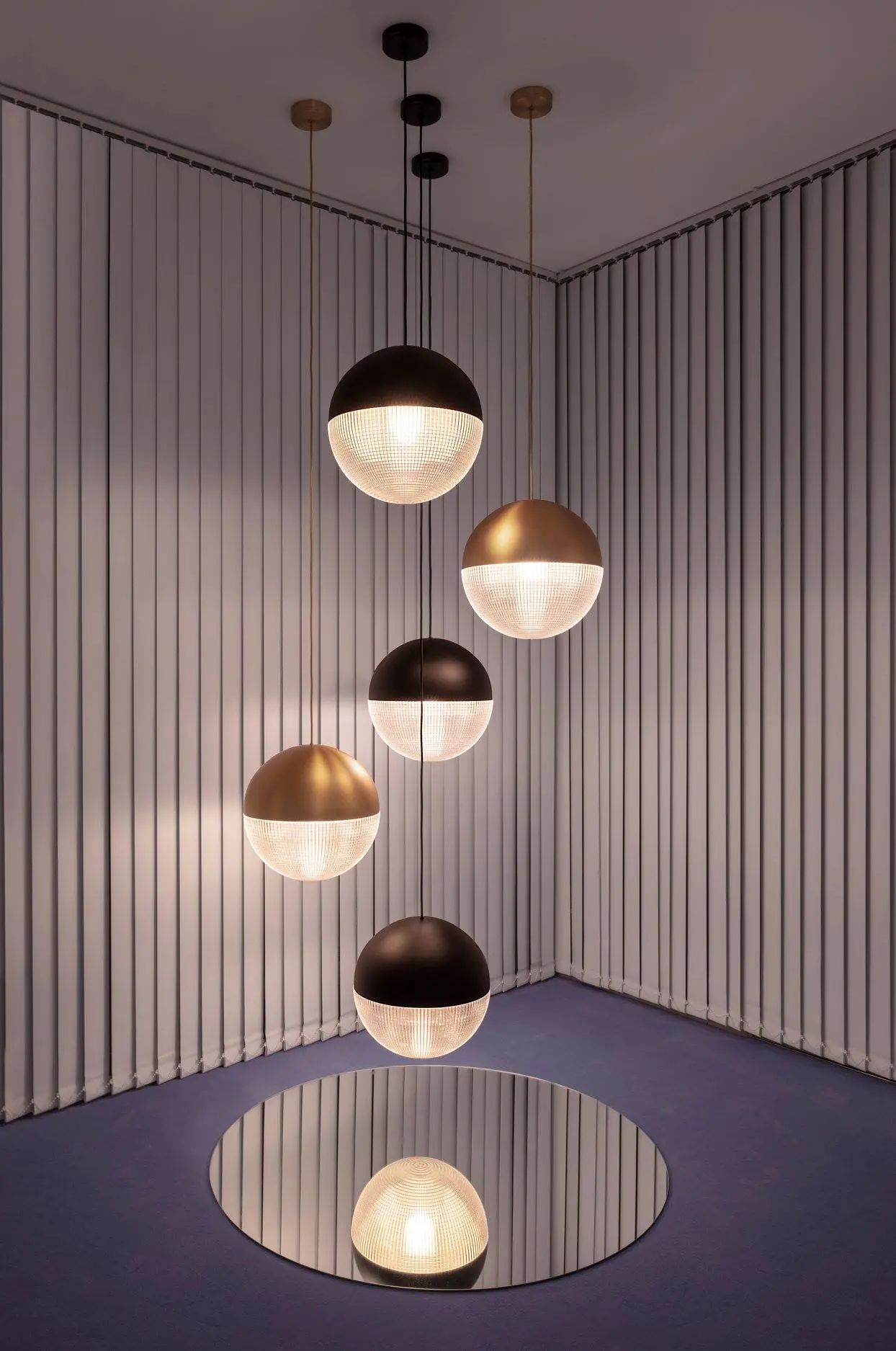
It seems obvious, but it’s sometimes overlooked: all your lights should be dimmable. That sort of control, particularly of the temperature, is extremely important. It emphasises times of the day, it dictates mood, it changes the texture of a space.
– Lee Broom, for Monocle, April 2025
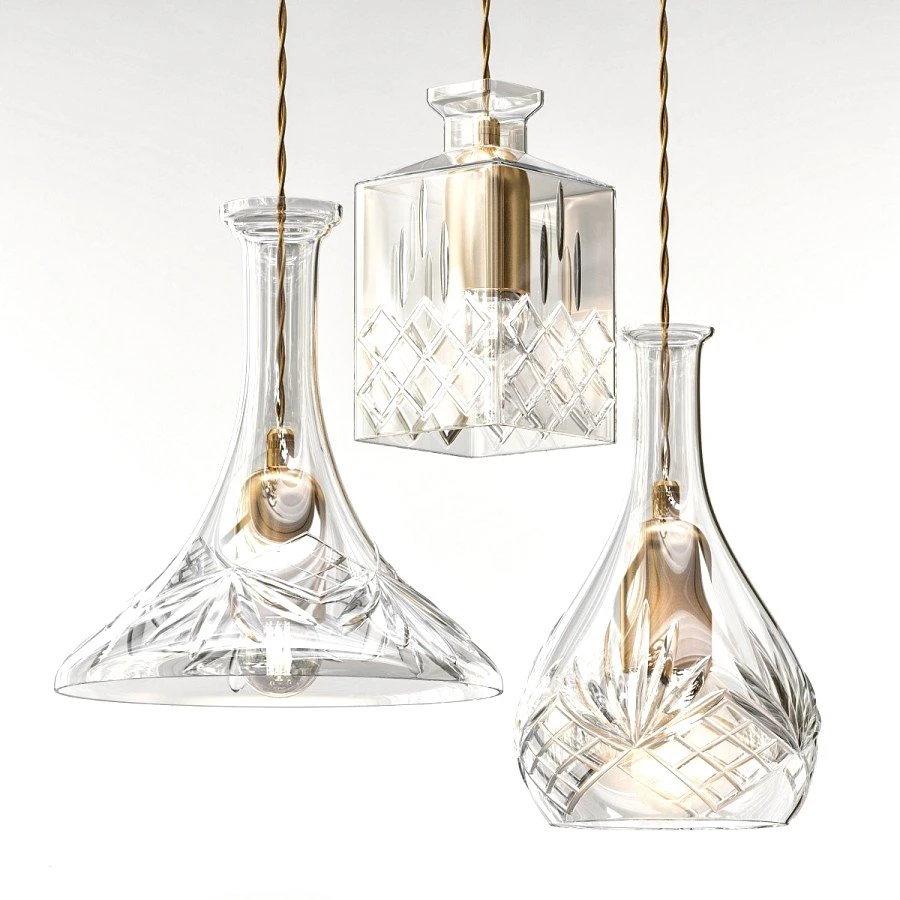
The irresistible allure of pre-war cut crystal
As Lee Broom’s first retail lighting collection, Decanterlight stands as both a meaningful testament and a still-relevant example of how a classic crystal decanter, once a hallmark of British glassmaking, can be successfully recontextualised. The idea of transforming something familiar, often unused, into a contemporary object with a new purpose not only revived interest in vintage decanters but also sparked the production of newly crafted versions. These are made by traditional glass artisans, preserving time-honoured skills and the value of handcraftsmanship.
A refined fusion of classic elements and contemporary design, Decanterlight pendants and chandeliers remain luxurious lighting pieces that impress both atmospherically and visually, marking the collection that first opened international doors for Lee Broom. It was, in fact, his first series-produced line sold in the UK (John Lewis and Liberty London), Hong Kong (Lane Crawford), and the United States (The Future Perfect).
For me, Decanter was a transition from DIY upcycling to creating something new on a mass level while retaining a hand-crafted element, it, something I took forward to the next stage of my product development. Its success was also pivotal with our move to the Shoreditch showroom – it was a signal that we needed to expand and move on.
What I’m most proud of is that we still sell Decanter and it continues to do incredibly well. Creating pieces with longevity is incredibly important to me, and it’s absolutely ticked that box – it’s a classic now.
– Lee Broom, for Livingetc, 2021
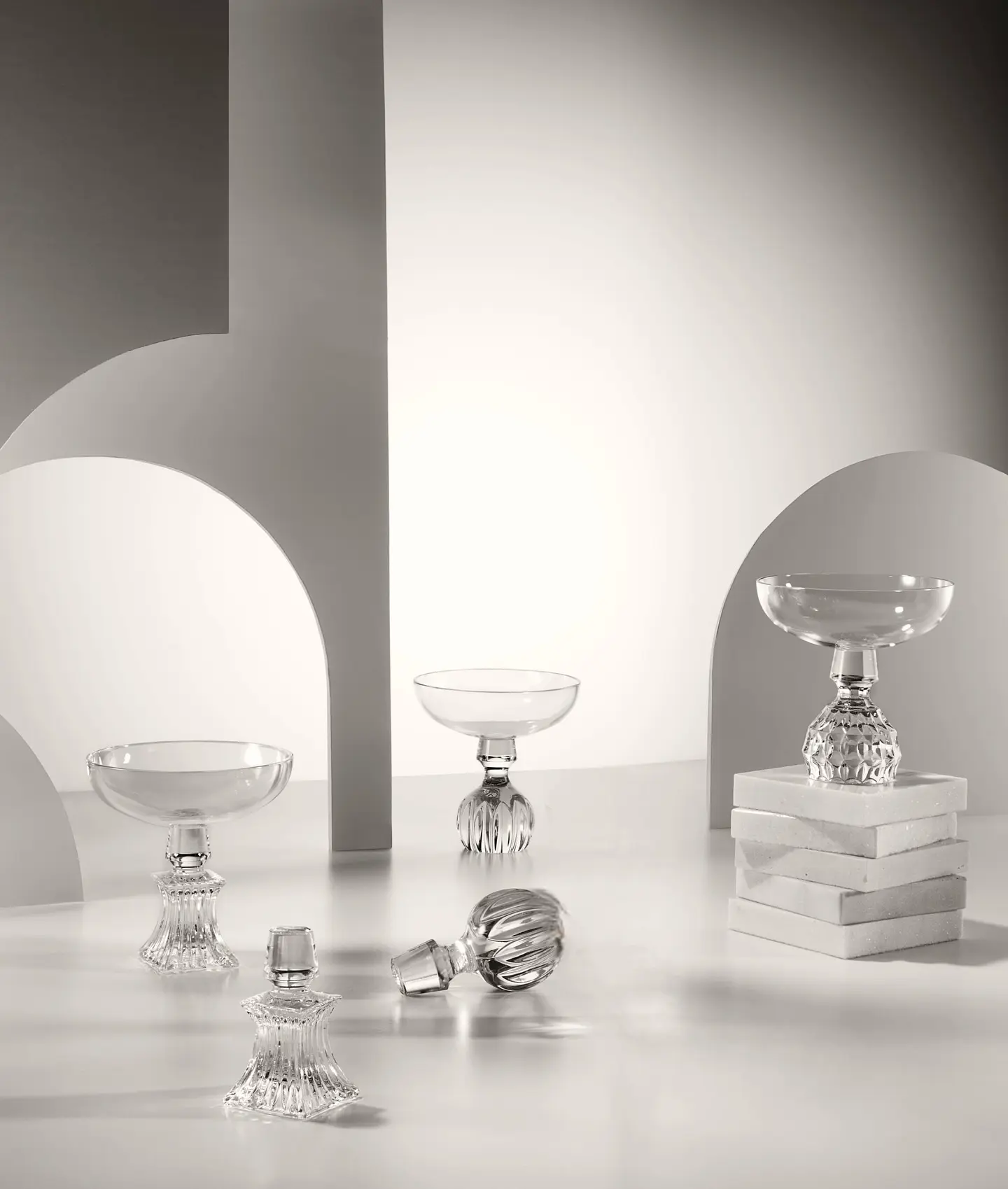
Following his entry into the world of glassmaking with the Decanterlight pendants, Broom soon began exploring new possibilities in crystal. He transformed the unused stoppers of vintage crystal decanters, which he had been collecting for years, into stemmed crystal glasses for wine, champagne and martini. That was a three-piece collection titled Half Cut and launched in November 2012.
Each glass was unique, defined by the vintage stopper that served as both functional support and decorative statement. Every stopper was polished, etched with the then-current Lee Broom crest, and cut to connect seamlessly with a newly hand-blown glass bowl. From the many stoppers he sourced, four shapes proved most common and suitable for small-scale production – round, square, conical, and domed – allowing the glasses to be sold either as matching sets or as eclectic assortments of mixed bases.
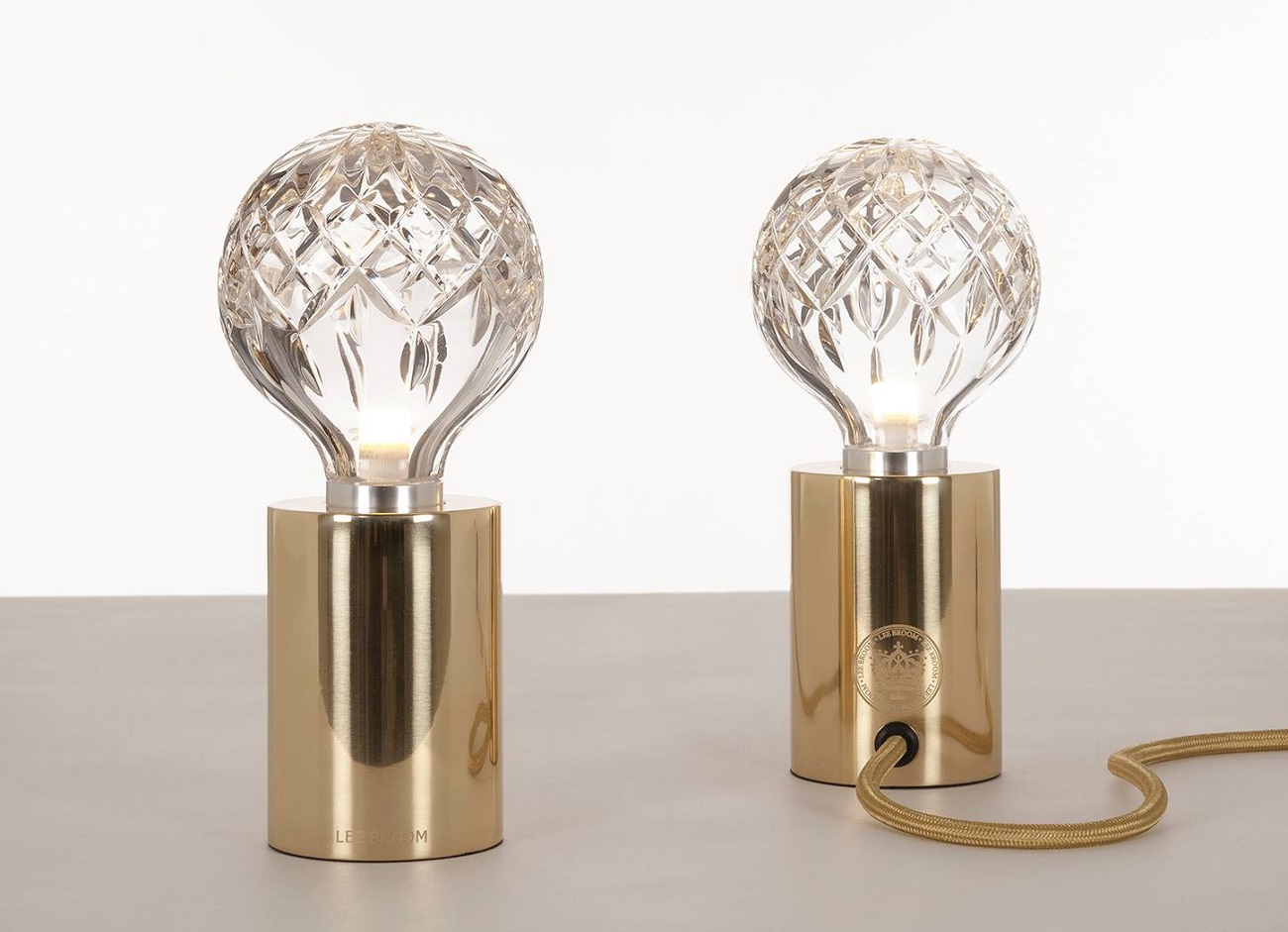
The following year, he staged an impressive exhibition titled Crystal Bulb, dedicated to a modern reinterpretation of traditional cut-crystal craftsmanship. For the occasion, he completely transformed his studio into a Crystal Bulb Shop, styled after pre-war general stores where goods were sold by weight. The space was filled with these bulbs and pendant lights – products that, thanks to their seamless fusion of industrial elements and the decorative qualities of lead crystal, set a new standard for redefined modern luxury.
I actually dreamt that product – I often dream about products, I’ve got a sketchbook by my bed – I’d been thinking about crystal, and about wanting to design another light fixture and one night I dreamed of the Crystal Bulb, I saw its silhouette, the cuts and it switching on. A lightbulb moment, literally. It was 2012 and eight weeks to go until we were making our debut at Milan Design Week – we scrapped what we were working on to release the Crystal Bulb instead, and the rest is history.
– Lee Broom, for Livingetc, 2021
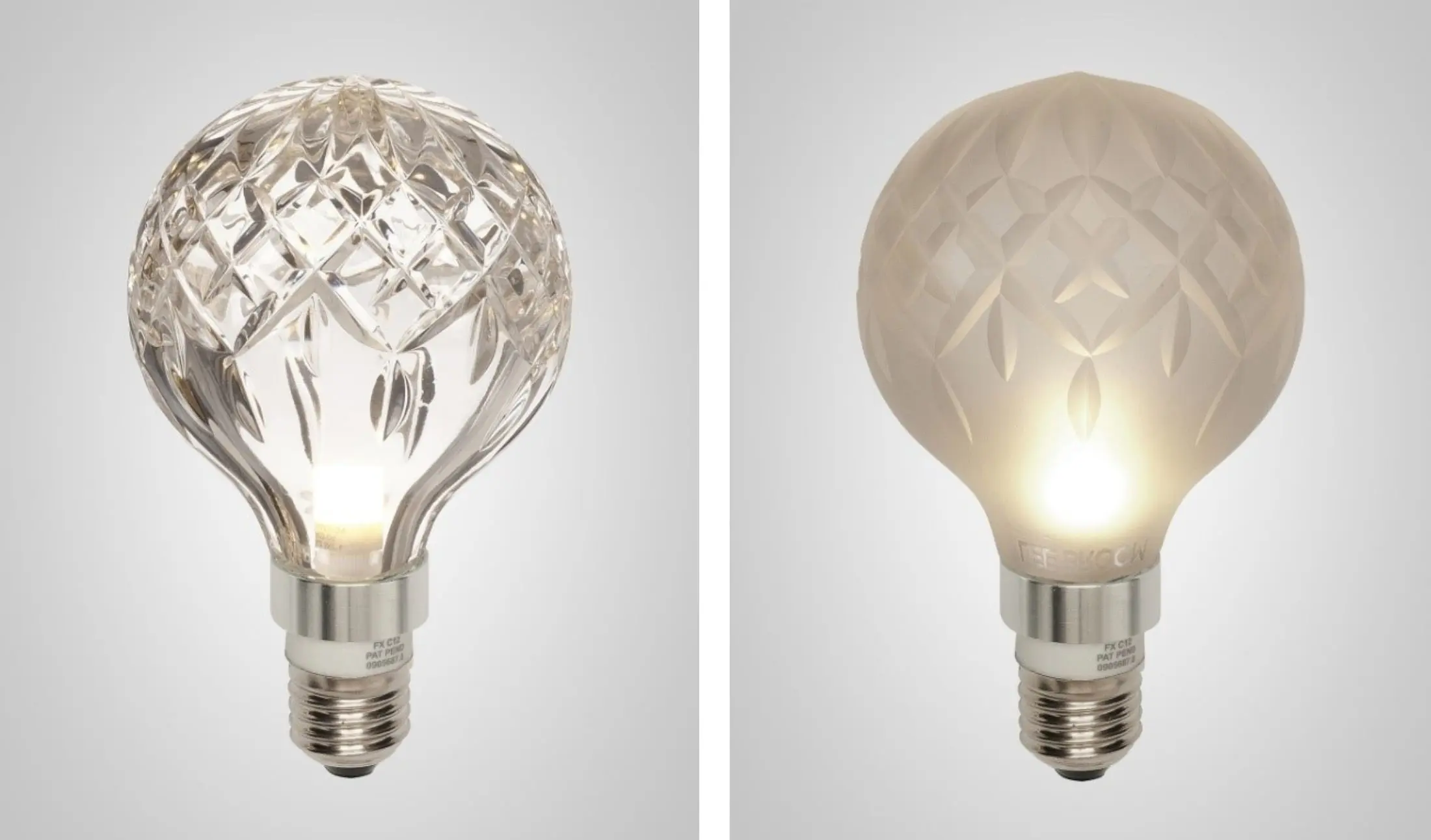
A designer with a flair for drama
Broom launches one or two new collections every year and consistently stages striking presentations at major design fairs in Milan, New York, London, and beyond. His products are now sold in over 250 stores across 50 countries, with flagship showrooms in both London and New York. In addition to his celebrated lighting pieces already mentioned, over the past decade he has received major accolades for designs such as Chapel Light, the Mini Crescent Chandelier, the Observatory, Eclipse, and Alchemist collections, as well as the dramatic Vesper and King chandeliers.
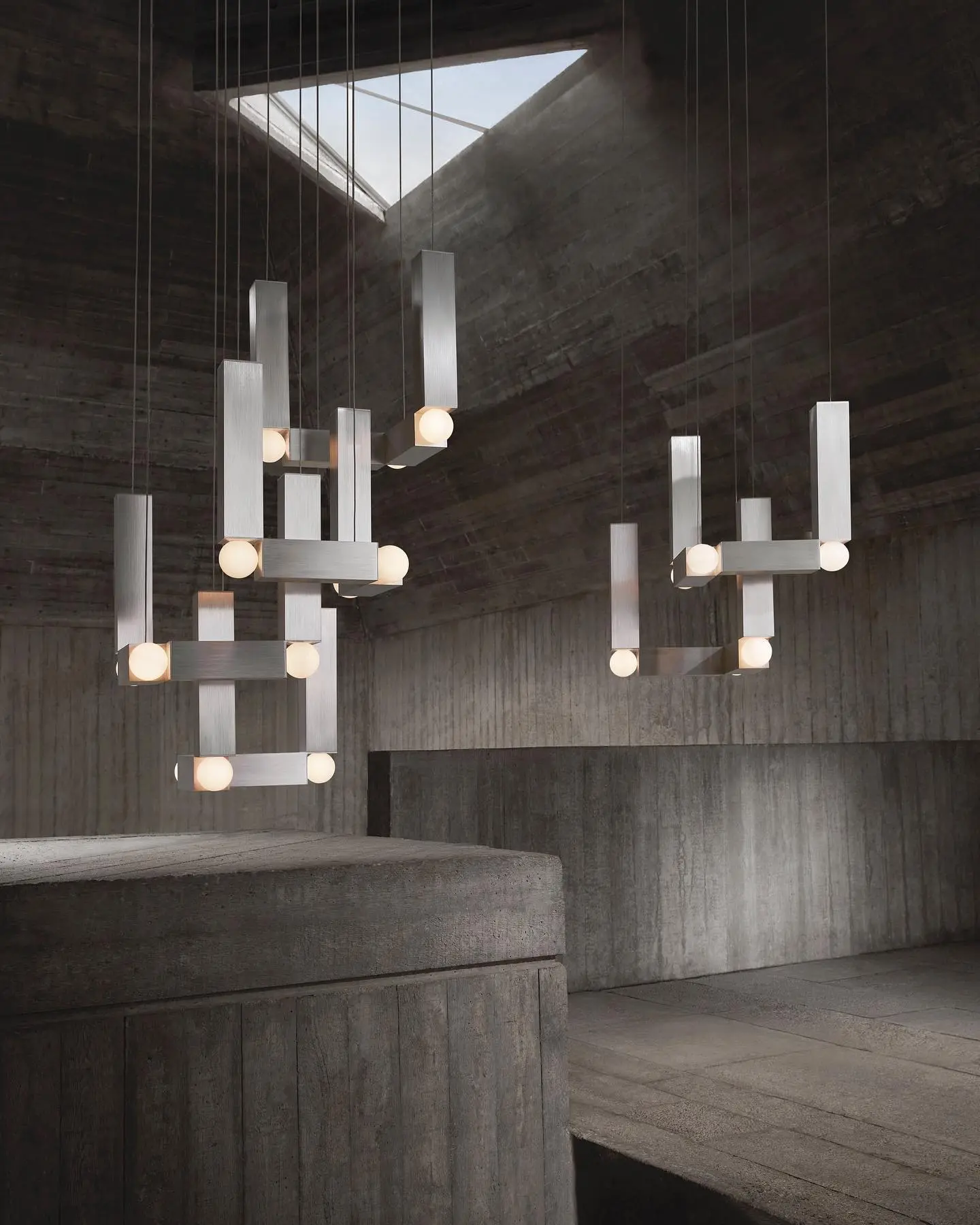
Thanks to his background in theatre and fashion design, Broom has also mastered the art of presenting his work to the public. His exhibitions and product launches are often staged with dramatic flair. Some, like the debut of the Musico chair, even featured live performances by a chamber orchestra. Short promotional films further amplify the impact, combining originality, rhythm, and visual storytelling. As Becky Sunshine, author of the illustrated Rizzoli monograph LEE BROOM: FASHIONING DESIGN, observes, the worlds of theatre and fashion “have permeated his creative thinking and the way he presents his work as immersive experiences”.
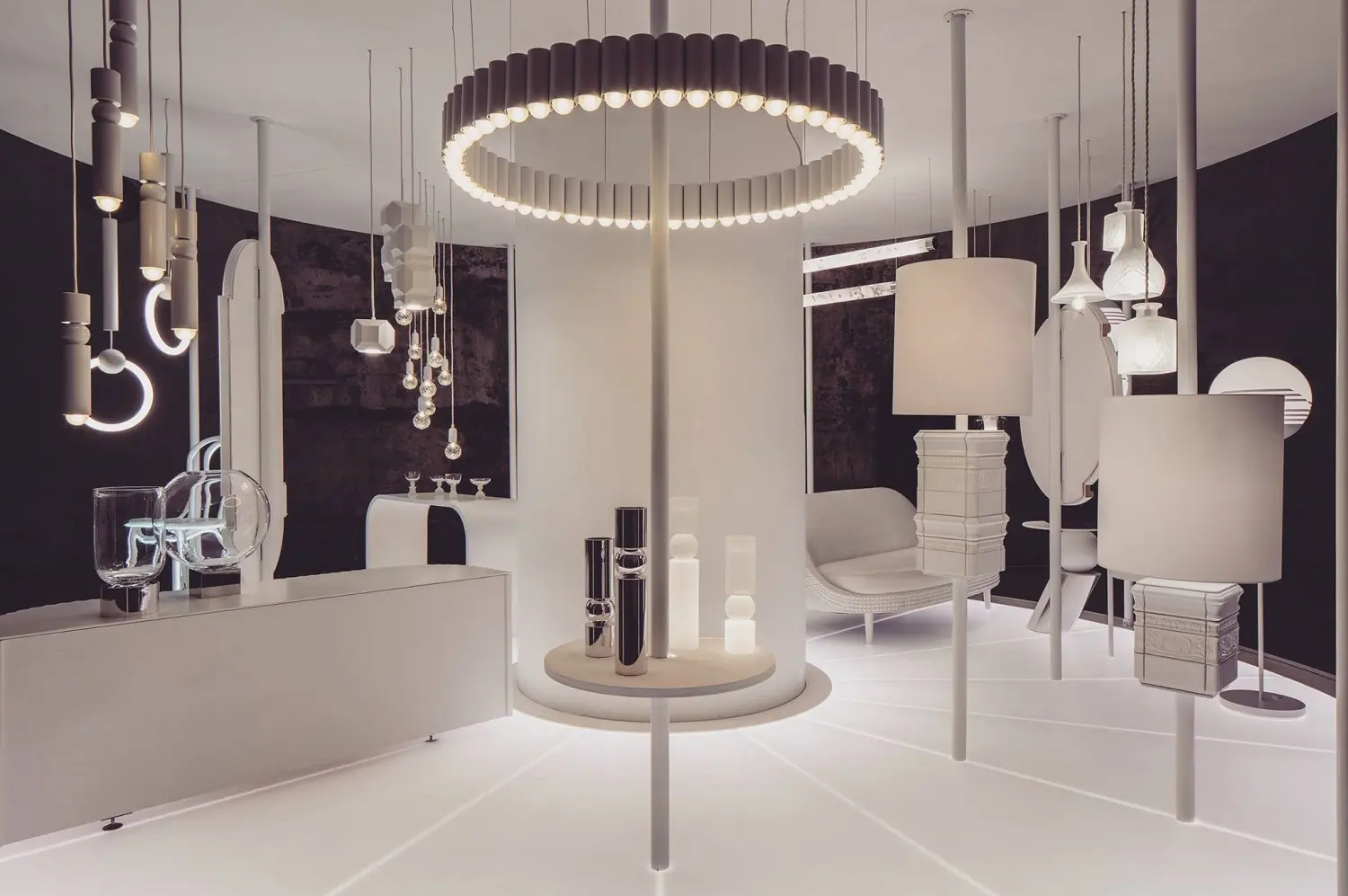
Li Brum has clearly been, and remains, deeply inspired by the history of British design. With an innovative approach to lighting and furniture design, he skillfully merges traditional craftsmanship with contemporary aesthetics. Committed to high-quality materials and flawless execution, he creates collections that transcend trends, offering timeless pieces that seamlessly fit into a variety of interiors. As a recognised design visionary, he is now entering a mature phase of his career, and he will certainly continue to push boundaries and redefine modern luxury.
References
- AndLight. (online). Lee Broom | AndLight.
- Archello. (online). Lee Broom.
- David Village Lighting. (online). Lee Broom Decanterlight Chandelier.
- Etherington, R. (2010, November 17). Decanterlight by Lee Broom at The Temporium, Dezeen.
- Inspyer Lighting. (online). Lee Broom Decanterlight Chandelier.
- Jones, R. (2025, April 7). British designer Lee Broom on lighting as a form of art, Monocle (Design).
- LEE BROOM. (online). https://www.leebroom.com/.
- Lightology. (online). Bell Decanterlight Pendant By Lee Broom, For Lee Broom.
- Low, S.P. (2019, March 25) Lee Broom: “I Be Myself As Much As I Can”, d+a DESIGN AND ARCHITECTURE (People).
- LUMENS. (online). Decanterlight LED Multi-Light Pendant by Lee Broom.
- Nest. (online). Lee Broom Decanterlight Chandelier.
- NO GA. (online). Lee Broom.
- squirrelbait. (2007, August 21). Lee Broom’s Neo Neon collection, Core77 (Object Culture).
- TRENDHUNTER Create the Future. (online). Modern Louis XV Furniture.
- Wong, A.M. (2021, January 26). Behind the Design: Lee Broom on the story of how his award-winning Decanterlight came to be, Livingetc (Features).
- Wu, D. (2022, November 4). Coquine, Wallpaper* (in Features).

This edition is the part of the programme “Glassmaking Tradition Meets Innovation” funded by the European Union. Views and opinions expressed are however those of the author(s) only and do not necessarily reflect those of the European Union or the European Education and Culture Executive Agency (EACEA). Neither the European Union nor EACEA can be held responsible for them.