Bettina Schori: New Stories of Unwanted Glass
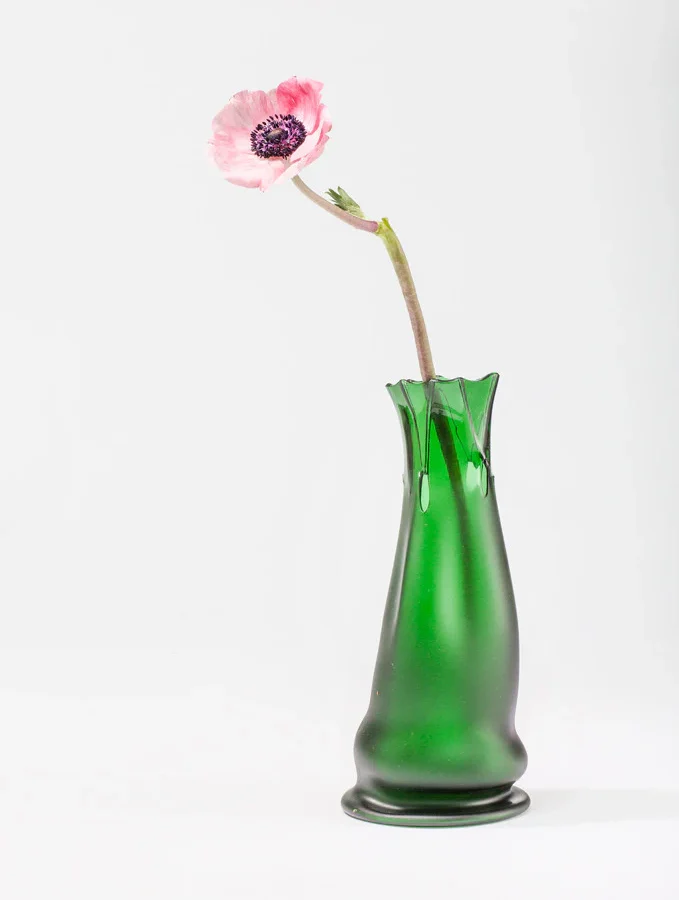
Bettina Schori: New Stories of Unwanted Glass
Bettina Schori upcycled glass long before it became fashionable. Cultivating a worldview in which everything is temporary, this Danish glass designer and sculptor early on embraced upcycling as a working method that explores how discarded objects can be reused, thereby eliminating the need for new production. Already in 1998, she was among the artists whose works were presented at one of the first European exhibitions dedicated to recycling and eco art (Upside Down – Inside Out at Bibliotekssalen Rundetaarn, Copenhagen). From those beginnings to the present day, her sculptural vases, lamps, and spatial installations have been exhibited at more than 40 Danish and international exhibitions.
I am inspired by the world around me: cycles of nature, an awareness of our impermanence, the fact that everything changes. I see new options in discarded materials, I give them a new life, another context. Used products with a story inspire me a lot.
– Bettina Schori, for Homo Faber
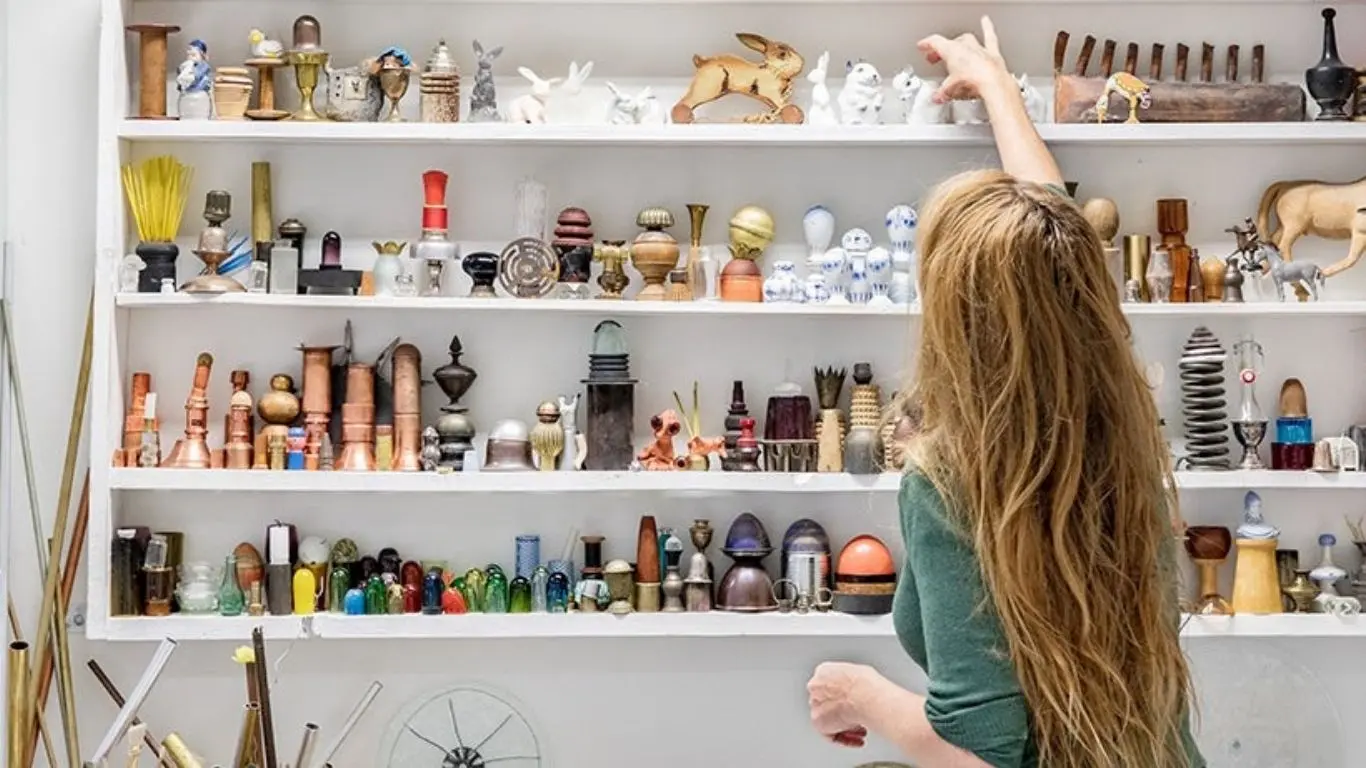
Exploring glass and beyond
I tell stories and play with materials. I work with proportions, shapes, colours, contrast and connections. Combining all these elements, for me, is a process much like playing. The unpredictability can be a challenge, but mostly I see it as a gift.
– Bettina Schori, for Homo Faber
A master of proportions and recontextualisation
After decades of working with used and discarded objects as artistic material, Bettina sees herself primarily as a specialist in proportions.
One of my skills is having a good eye for proportions. I also have the ability to see new opportunities in unusual materials. Being open-minded, finding new possibilities and seeing a small story behind every objects: these elements make for wonderful adventures.
– Bettina Schori, for Homo Faber
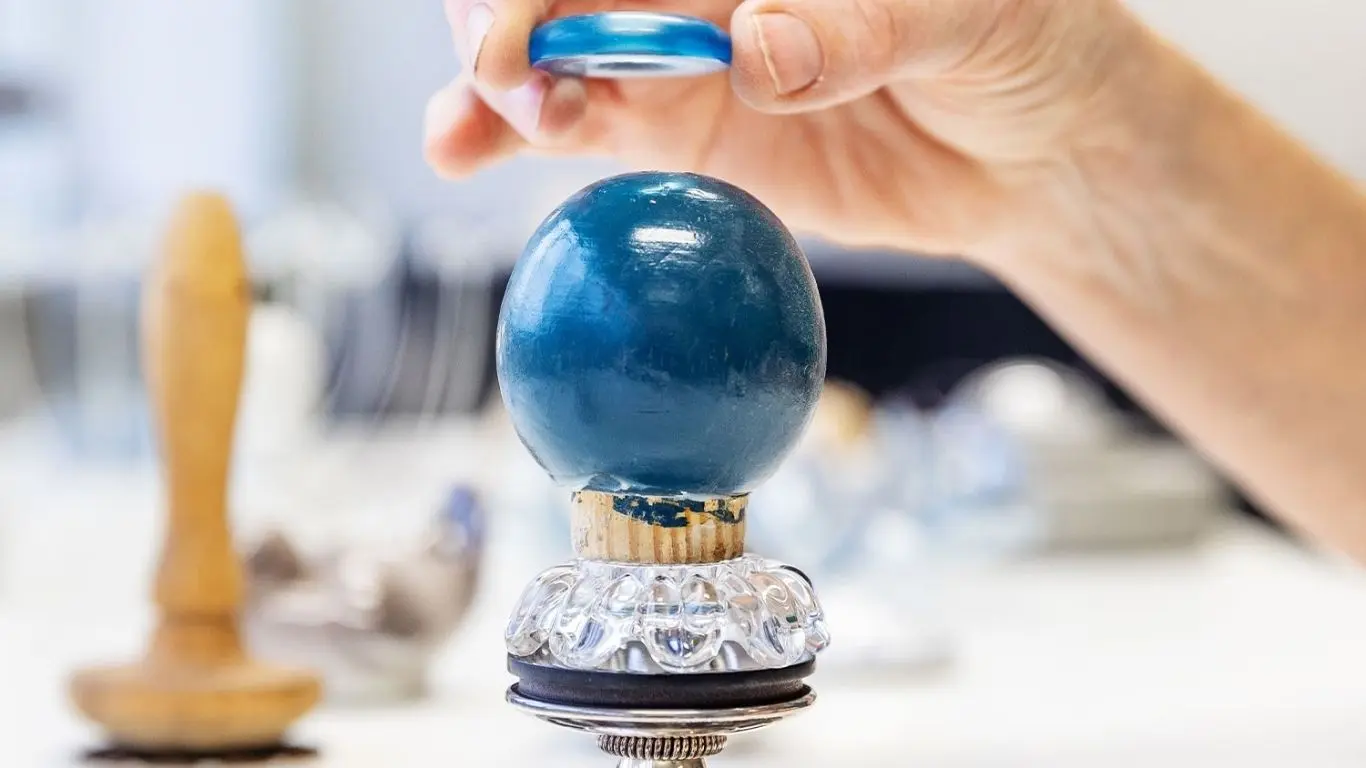
Her interest in upcycling began with exploring possible ways to use discarded bottles of wines, waters, beers, etc. Bottles were a natural choice of material for her work because they are easily found everywhere in different sizes, shapes, and colours. By applying various glassmaking techniques to used bottles – cutting, grinding, fusing, slumping, sagging, sandblasting – she began creating highly unusual vases and lamps.
… Glass production is highly resource-intensive, which is why I hesitated quite a bit about working with glass. Upcycling helps me feel good about working with it, since I use something that has already been made, which is also an exciting starting point both in terms of design and form.
– Bettina Schori, for Berlingske, 2015
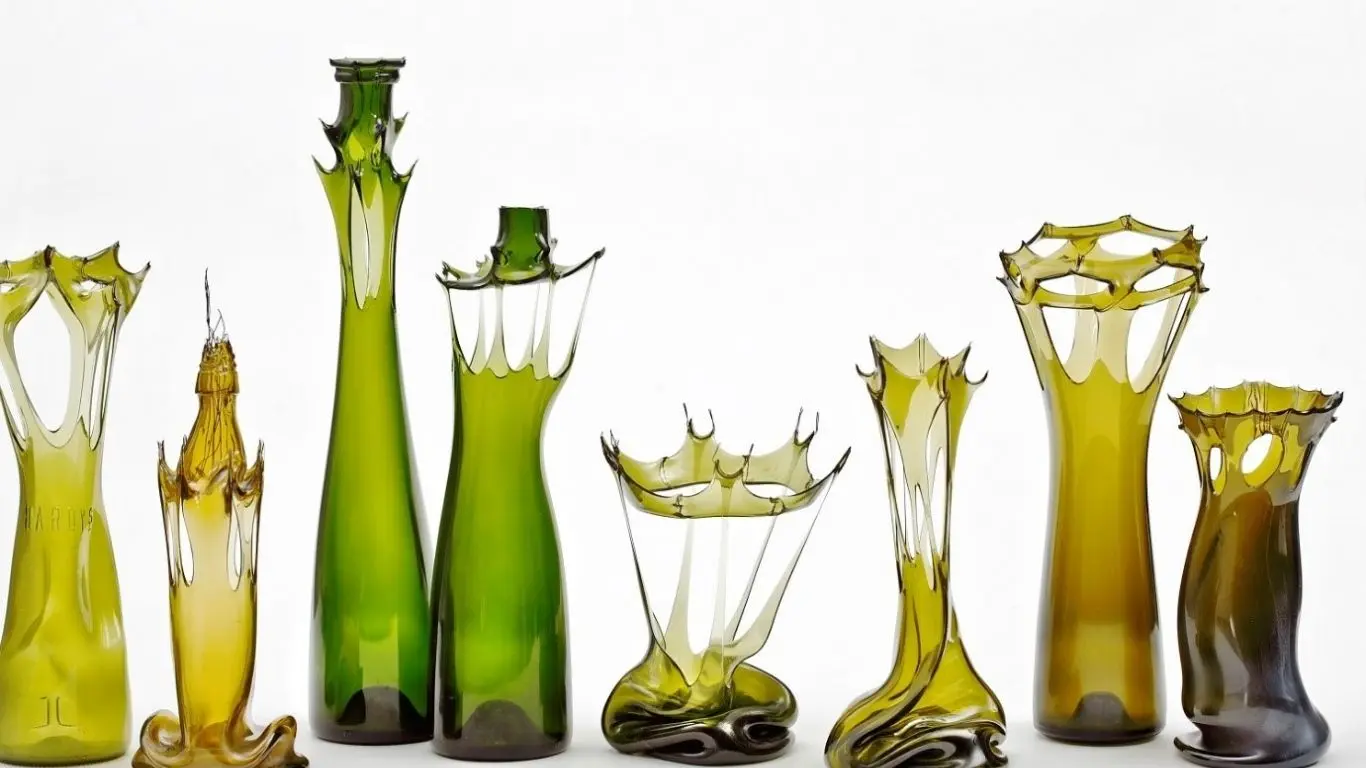
Bottle-vases and eclectic lamps by Bettina Schori
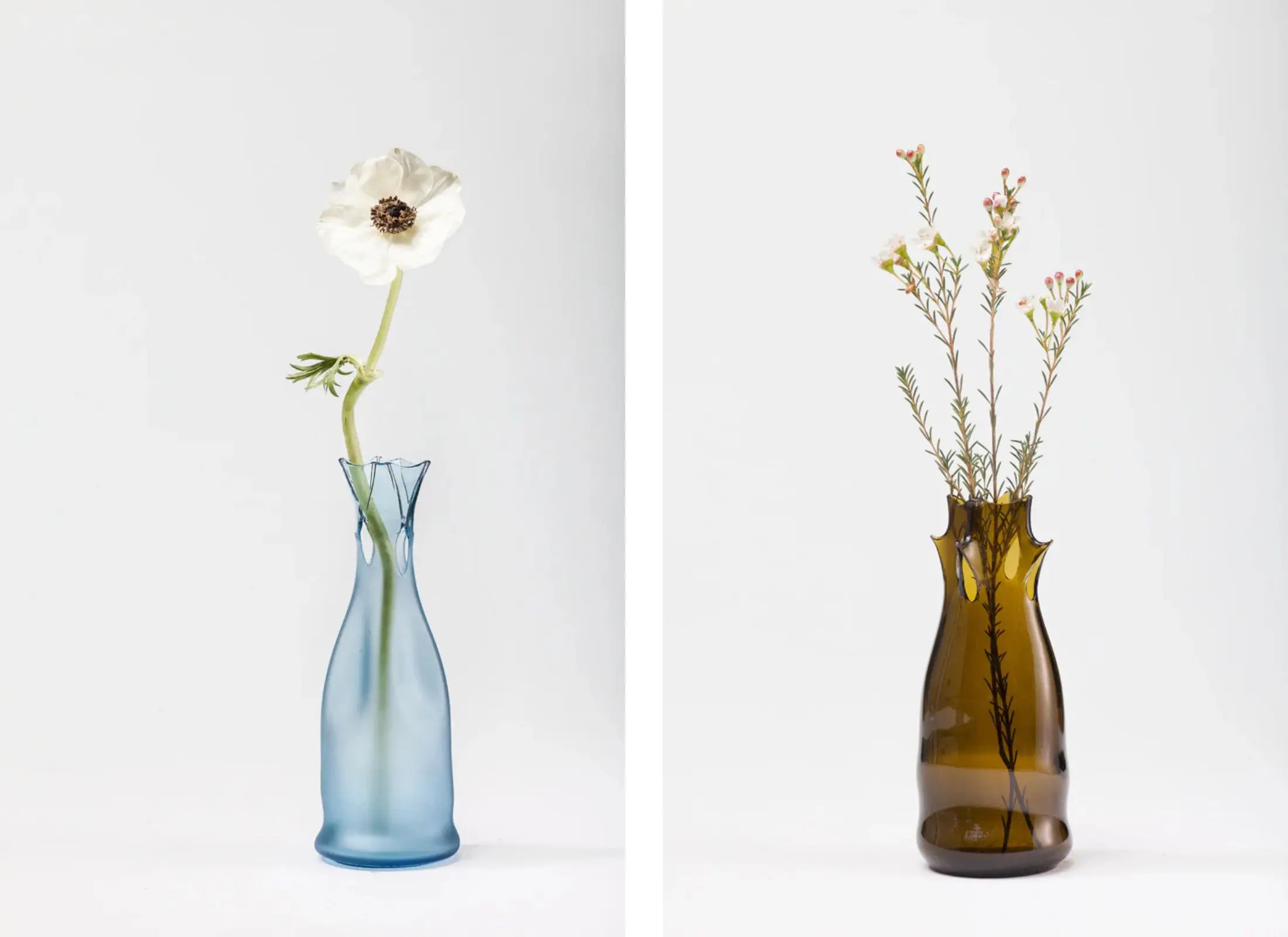
One of the collections for which Schori is now recognised is the Bottle-vases (Flaskevaser). These vases are the result of a long-term experimentation with the slumping and sagging of used bottles in a specialised furnace (kiln). She wanted to master this process of heating a bottle in the kiln, causing the glass to bend, slump and stretch. Bettina also drills the bottles in various places to create unusual vase decorations. Since different bottles melt at different temperatures, mastering this process requires a lot of time and effort. While most artists therefore remain on a single successful piece, Bettina has developed entire collections.
Bottle-vases are made by a mix of serendipity and experience... I like to, kind of, figure out how they will look depending on where I drill the holes and how I hang them. The bigger (wine bottles) and more advanced ones can only be made one by one in the kiln, and I have to watch them very carefully. Different bottles have all different melting temperatures.
– Bettina Schori, for Creative Glass Serbia, 2025
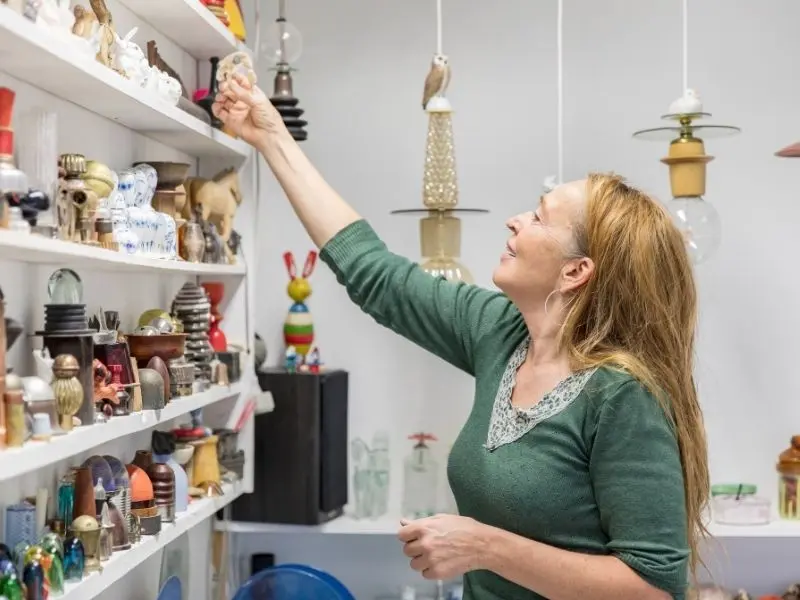
The path of upcycling glass bottles led Bettina to combine glass with objects made from other materials as well. This is how she arrived at the concept of Upcycling Light Deluxe pendant lamps, to which she dedicates the largest part of her working time today.

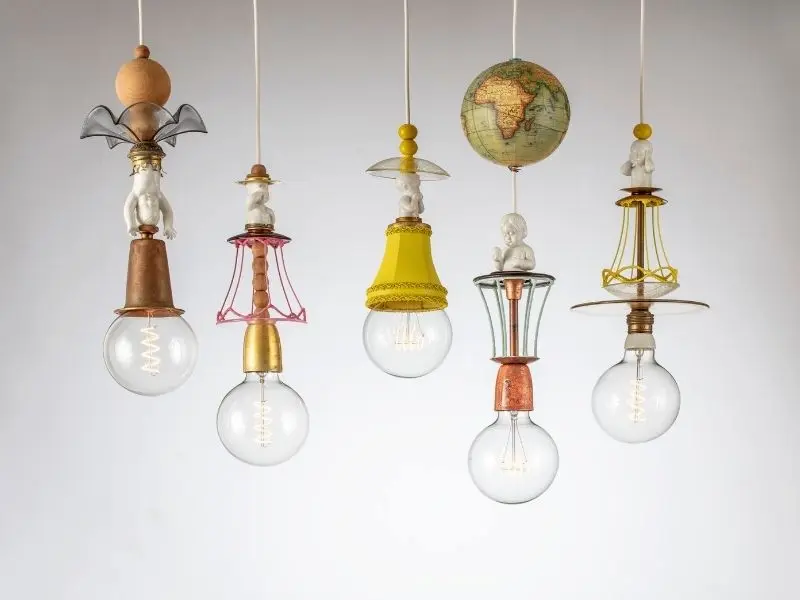
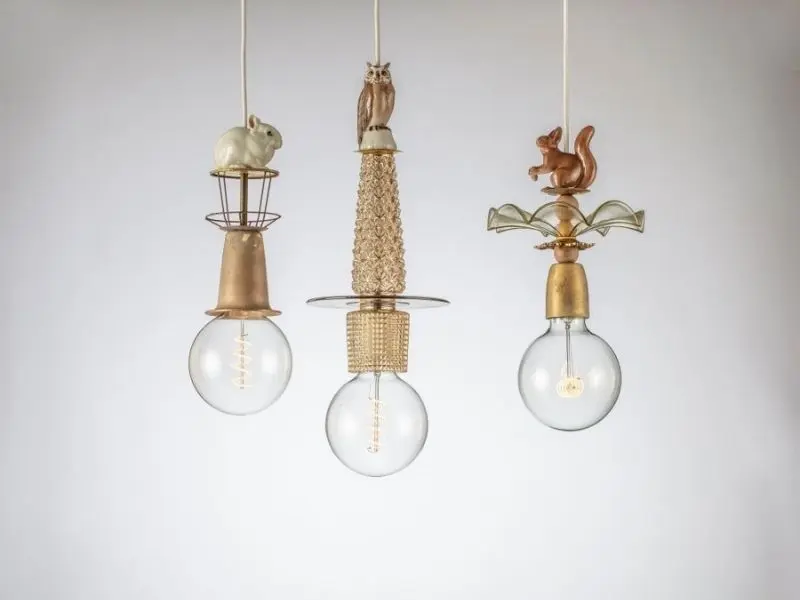
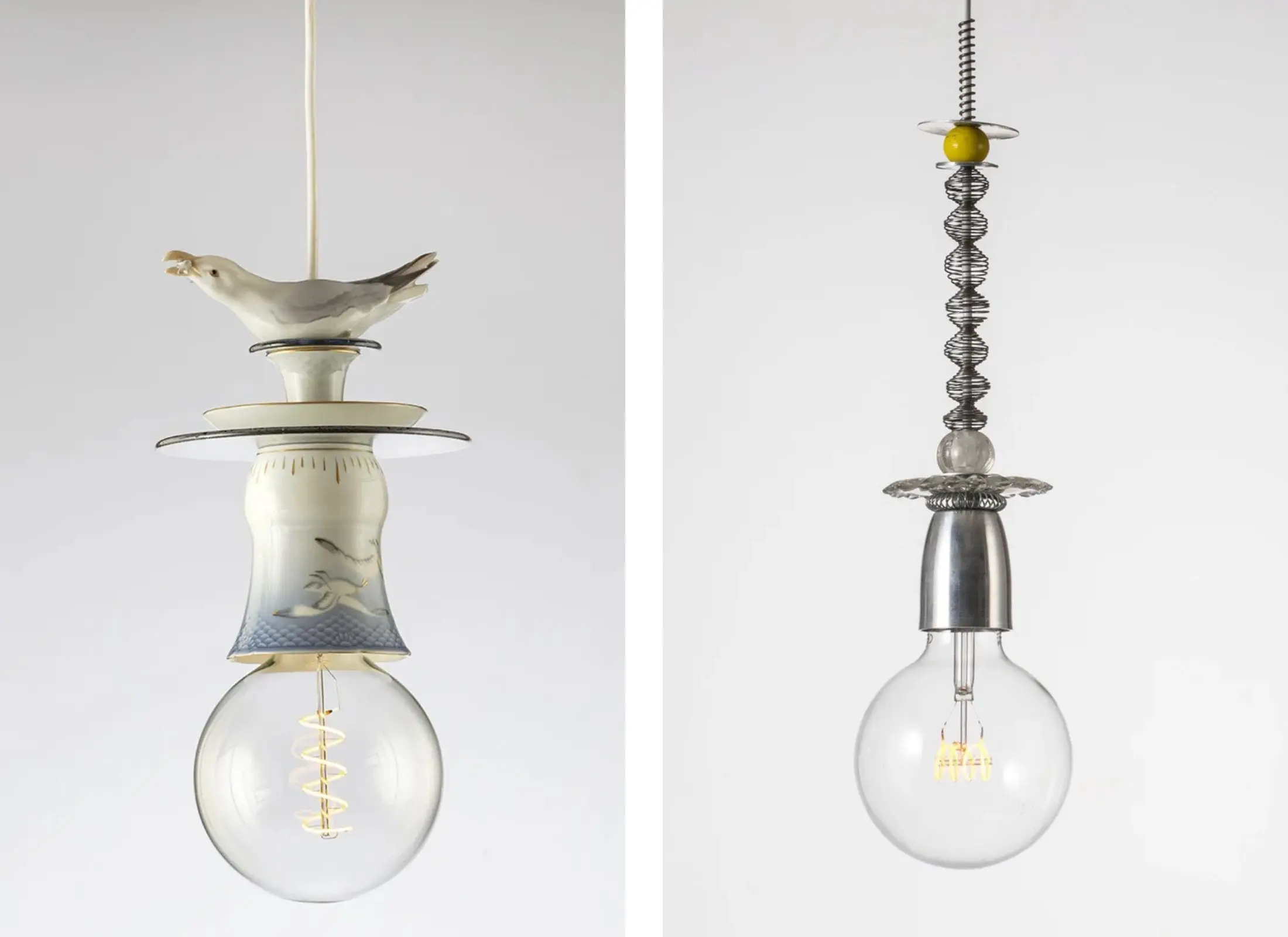
I love when my work touches something in the viewer. When it can bring inspiration and joy into people’s lives.
– Bettina Schori, for Homo Faber
The danger is often that you want to put too many stories in a lamp, even if it's fun and tempting. But it's the simplicity that works. There must be a course and a rhythm in the expression. It has to be subtle and simple.
– Bettina Schori, for JydskeVestkysten, 2017
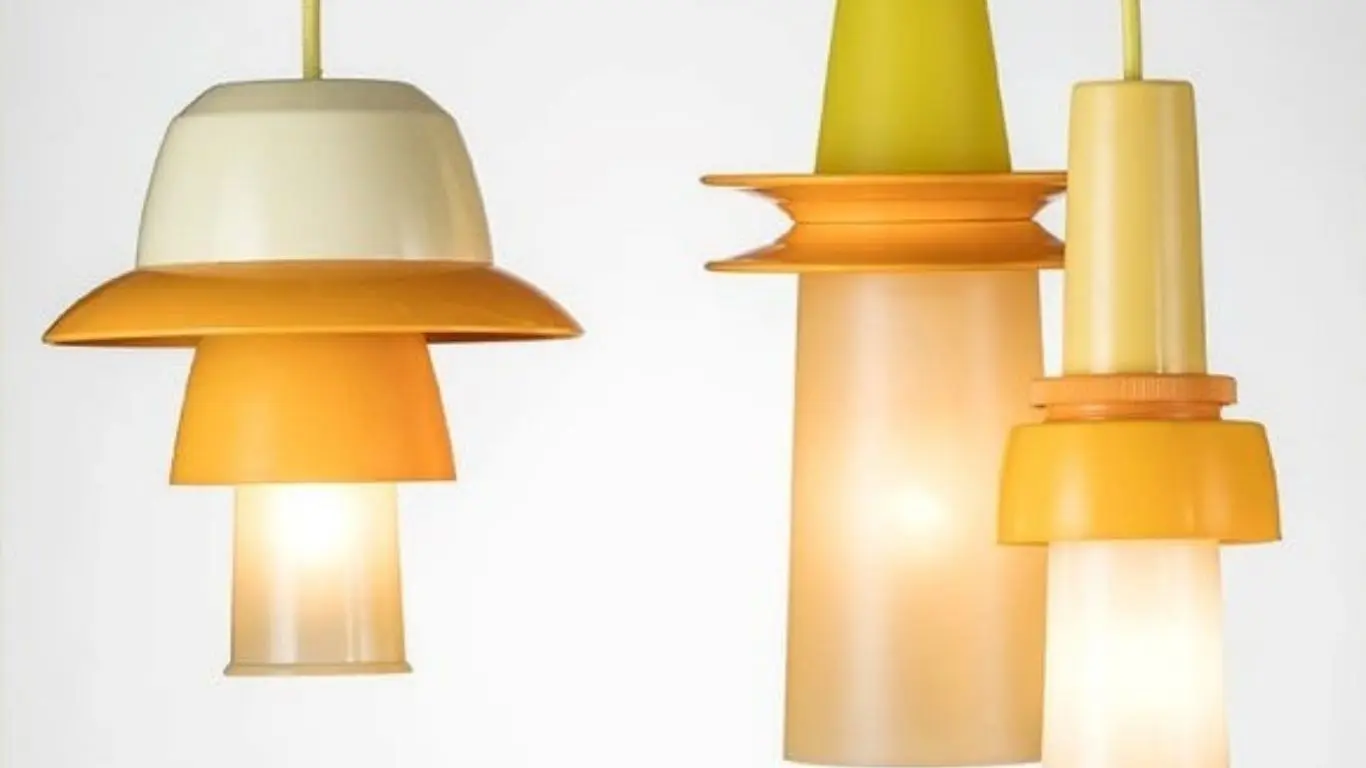
Plastic Fantastic!
Bettina’s fascination with unique lamps has extended to a broader use of discarded plastic, a material that, due to its ubiquity and environmental impact, captures the attention of many artists. This led to the creation of the Plastic Fantastic collection. It consists of one-of-a-kind, vibrant lamps with a fresh look, made from used Tupperware and other plastic dishes and cutlery.
Bettina’s first departure from upcycling glass
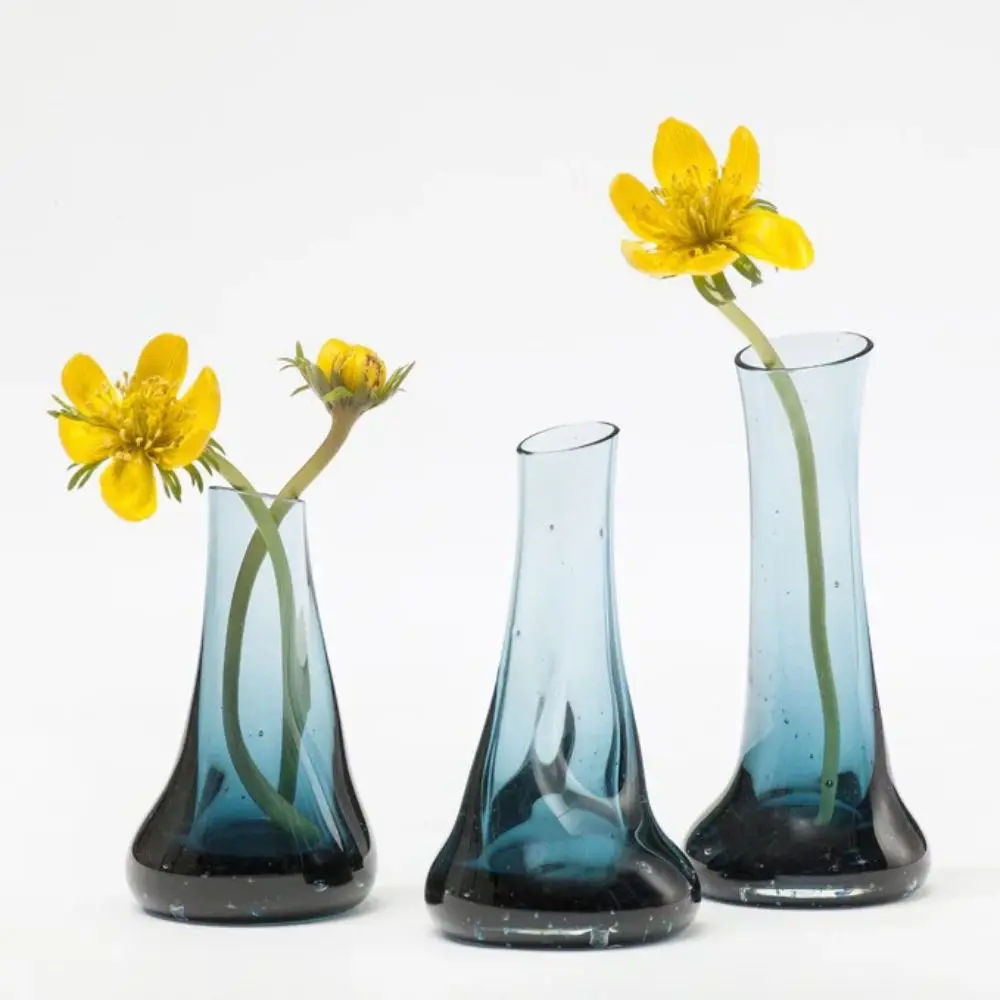
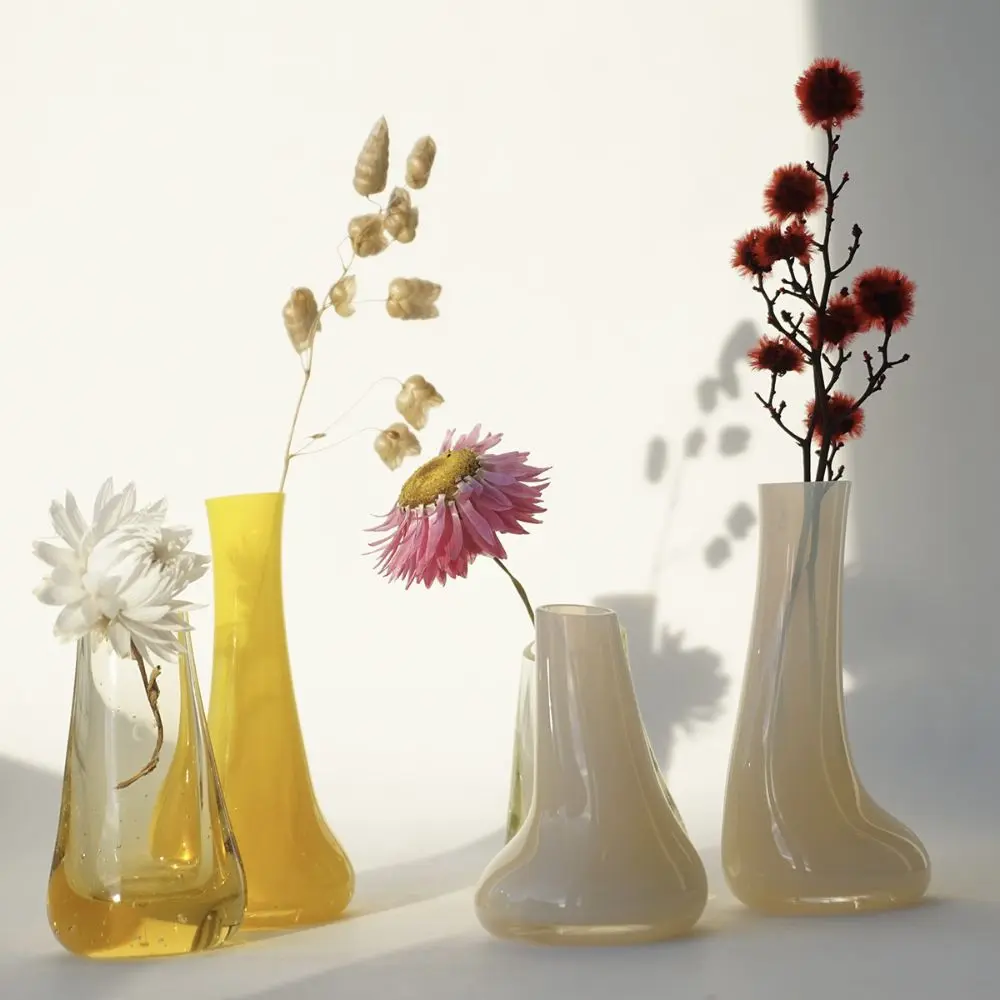
Mastering the creation of Bottle-vases, which retain the aesthetic of the bottles from which they were made, Bettina has also started making vases from new glass, using the same techniques (cutting, slumping, etc.). Inspired by Scandinavian design tradition and called Drop Vases, these small and elegant vases are meant for a single flower – a spring snowdrop or another bloom that “simply doesn’t fit in” with other flowers.
The dropvases actually started as a result of some playful experiments with the slumping technique. But since I am now more into upcycling, I don’t think I will make more collections from new glass. But you never know ...
– Bettina Schori, for Creative Glass Serbia, 2025.
Designer of Europe’s future
Her works have been exhibited at the most prestigious European craft and design exhibitions, and are sold through around 30 museums, galleries, and concept stores worldwide. With her presentation at Homo Faber’s biennale in Venice (2022), she was among the Next of Europe – creators of Europe’s future. For two consecutive years, she exhibited at the Maison & Objet fair in Paris (2010, 2011), while her most significant exhibitions were at Louvre in 2016 (Le Carrousel des Métiers d’Art et de Création, organised by the French Ministry of Culture) and the Design Museum in Copenhagen, where her work has been presented multiple times (DesignEXchange 2000, 2010, 2017, and Circular Furniture Days 2021).
Bettina is not much of a consumer in her private life either. She lives very simply, rarely buys new things, and uses few resources. By affirming these values through design as her vocation, she has for 30 years helped people to see waste as a resource rather than something to be destroyed. Recently, she spent three months at a recycling station in India, collecting and cleaning waste elements from which she created works for the Kontrafej exhibition (2024) in Odense. With her sincerity, education, and commitment to an effective and today, in the midst of the European Green Deal, widely desirable way of working with glass, she has developed a recognisable design style and produced pieces that, in the words of the curator of the Parisian concept store La Trésorerie, are simply poetic pearls.
References
- Bettina Schori. (online). Bettina Schori.
- Creative Glass Serbia. (2025). Interview with Bettina Schori. Paraćin: Creative Glass Serbia.
- Danske Kunsthåndværkere & Designere. (2024, March 21). “Kontrafej” sætter ansigtet til skue i RUMMET hos Dina Vejling. Danske Kunsthåndværkere & Designere (Udstilling).
- Danske Kunsthåndværkere & Designere. (online). Kunsthåndværker: Bettina Schori. Danske Kunsthåndværkere & Designere.
- HOMO FABER (online). Bettina Schori: Glass sculptor. HOMO FABER (Discover).
- HOMO FABER. (2022). Next of Europe (E-catalogue). HOMO FABER (GUIDE, EVENT)
- La Trésorerie (online). Soliflore Drop Jaune, Bettina Schori. La Trésorerie.
- Limkilde, A. (2017, July 26-27). Design: Fra genbrugte glasflasker til nordisk elegance. JydskeVestkysten (Livsstil).
- Mademoiselle B (online). Upcycled unique pieces of work made of glass and plastic waste. Mademoiselle B, Sustainable luxury magazine.
- Raabæk, A. (2015, January 14). Nyt liv i gamle flasker. Berlingske (BIL).
- Villvin (online). Dråpevase 1. Villvin Gallery (Produkt).

This edition is the part of the programme “Glassmaking Tradition Meets Innovation” funded by the European Union. Views and opinions expressed are however those of the author(s) only and do not necessarily reflect those of the European Union or the European Education and Culture Executive Agency (EACEA). Neither the European Union nor EACEA can be held responsible for them.